

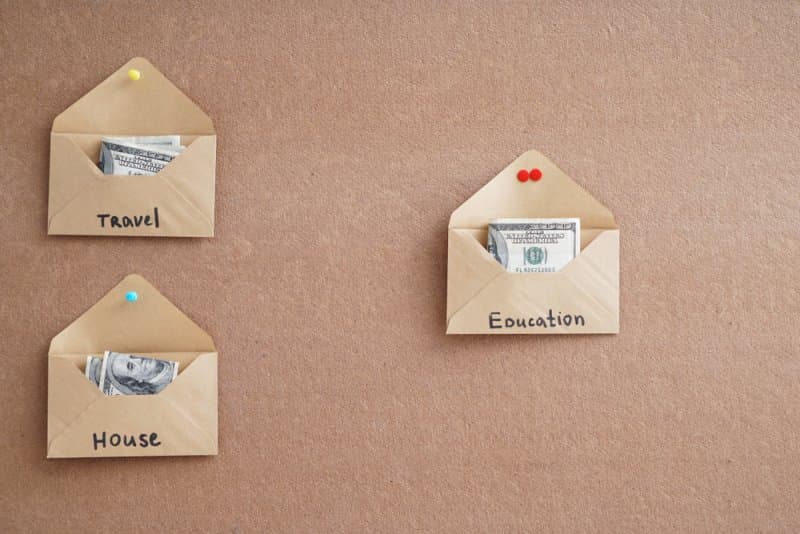
If there is an expense that doesn't happen each month, having a sinking fund is a smart idea. From your road trip to your appliance replacement to your annual insurance bill, a sinking fund lets you save a little each month so that you're prepared when the time comes, and you can do so without the worry of not having the money.
A sinking fund is money you put aside over time for a future expense. Rather than paying a large bill out of your total income each pay period, you make smaller payments on it during weeks or months. The money is put into a fund that isn't touched by your day-to-day finances.
Suppose you have a $1,200 vacation planned in 12 months. To budget for it, set aside $100 each month toward the goal. Not only does this give you time to get ready for the expense, but it helps make it less daunting than if you were to save the entire amount all at once.
A sinking fund doesn't require a large income or complex plans. Simply begin by noting those items that aren't on the monthly bills that you will probably spend money on throughout the year.
Think about the purchases you know you will make in the future. The bills you will have to pay every year. Your personal financial goals. When you know what costs you anticipate, figure out how much they will be and when you will need to have them.
Open a separate savings account or create a savings section within your account so you can keep better track of your savings. Many banks also offer the ability to set up multiple savings buckets in one account.
A sinking fund budget ensures that every single item you want to save for has a place in your budget. Firstly, check your income, your basic expenses, your loan repayments, and your current savings commitments. This will allow you to see how much money you can throw into your new sinking fund without impacting your income.
Then set your savings goals, sorting first into those that are the most important and the quickest. For example, if you are wishing to pay for your car registration this month and take your holiday next year, then the car registration might be the priority to pay for.
Use simple types of sinking funds to make account setup easier. Some sinking fund ideas are as follows:
Cost of sinking fund examples can be tailored to your lifestyle. You don't need to set up all of the sinking fund categories right away. Concentrate on the costs that most apply to your financial circumstances.
How much you need to save depends on how much you anticipate an item will cost and how long you have to save for it. There's no ideal amount that should be saved each month. Instead, you just need an affordable amount that works with your budget.
Maybe you have some house maintenance repairs you know about that you'll have to shell out $900 for in nine months' time. So put aside $100 for each of the nine months leading up. If you have a few goals, work out the payment for each and add them all up to give your total monthly savings amount.
Your monthly contribution is equal to the amount you need to pay divided by the number of months left. All you need to know is that amount and how many months are left to the due date.
Use this simple formula:
Contribution per month = Savings target ÷ Number of months.
For instance, if you plan to purchase a new laptop and wish to save $1,500 for the same within 10 months, you will have to save $150 per month.
A sinking fund calculator can help with this when you have many savings goals. You can input the amount of each and the deadline to work out what you need to set aside.
A spreadsheet can be used as a sinking fund calculator—just enter your goals, target amounts, monthly contributions, and balances, then check them monthly and change the amounts you contribute if your expenses or income change.
The biggest sinking fund advantage is that you will have funds available for future expenses. You will not need to wait for your next paycheck or borrow money when your bill exceeds your savings.
Additional advantages of a sinking fund are
The sinking fund advantages can help you manage your money in daily life. But how much you save doesn't matter as much as your regular payment.
A sinking fund is a great way to plan for future expenses without a negative impact on your monthly budget. Using the right expense categories, having effective saving goals, and working out an appropriate amount of money for your sinking fund, you will be able to create a sinking fund that actually works. Begin with smaller amounts, make it fun, and follow it over time.
If I have multiple savings goals (sinking funds), can I have multiple sinking funds? Yes, you can have a separate sinking fund for each of your savings goals, e.g., different sinking funds for travel, house repairs, or even your annual bills. This way you can keep each savings goal separate and easily see the balance for each one.
Options such as a regular savings account or a high-yield savings account may work for your sinking fund. Find one that's easy to access when payments are due, but that doesn't mix your savings with cash for spending.
You and your partner can also set up a communal sinking fund for things like a family vacation, home repairs or upgrades, and other family events. By determining how much to save and how much to contribute, you can stay on the same page.
YES! Great for any large purchase you are planning—things like new furniture, appliances, and updates to your home. When you save over time, you'll be able to make these larger purchases with ease and not impact your monthly budget.
You can apply any remaining balance to your next planned expense, save it for another goal, or put it on to some other item in your budget. It's up to you to decide what's coming up next and what you need to do with it.
This content was created by AI