

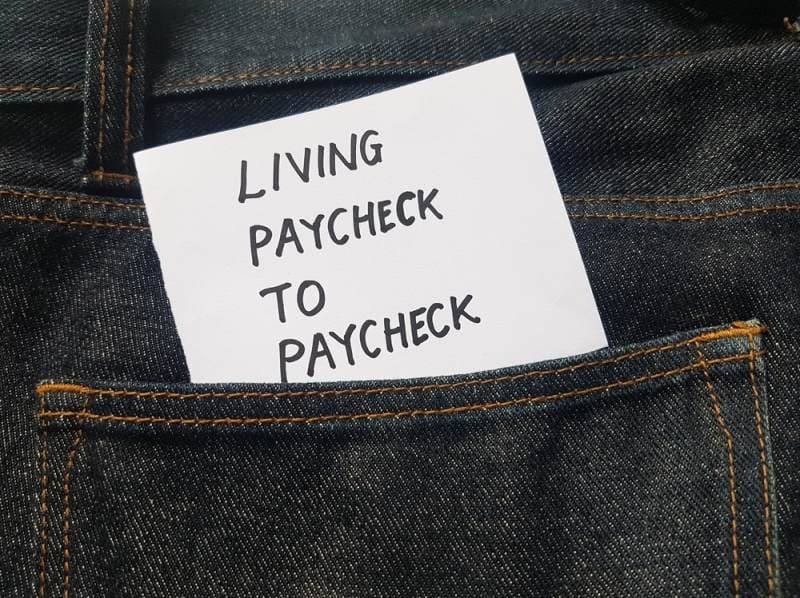
Staring at your banking app on a Wednesday afternoon and praying your rent check does not bounce is an exhausting way to live. Most people assume this trap only hits minimum-wage workers, but plenty of six-figure earners are completely broke two days before payday. Living paycheck to paycheck is not always an income problem; it is usually a cash-flow problem. When every single dollar you earn is already spoken for before it even hits your account, you have zero control over your life. One surprise bill wrecks your entire month.
It means your entire monthly income disappears the second your bills hit. You cover rent, groceries, and utilities, and your checking account instantly drops back to zero. There is zero margin for error. If a single paycheck gets delayed by three days, you cannot cover your basic survival costs without swiping a credit card.
Waiting until the end of the month to see what is left over guarantees you will save nothing. Using strict paycheck budgeting forces you to map out your cash the exact minute it lands in your account.
You match specific bills to specific paydays. Your first check covers rent and utilities, while your second check handles groceries and gas, completely stopping accidental bank fees.
Tracking every dollar per pay period forces you to stare at the truth. You quickly realize that daily drive-thru runs and forgotten app subscriptions are eating $300 a month.
Seeing a full checking account on Friday tricks your brain into thinking you are rich. Assigning every dollar to a bill or savings bucket immediately removes the temptation to blow it over the weekend.
Instead of guessing if you can afford dinner out, you check the exact category balance. You stop operating on gut feelings and start making cold, mathematical decisions.
Running your bank account down to the pennies every two weeks is like driving a car with no spare tire and no brakes. Eventually, something breaks, and the financial fallout is brutal.
When you have zero liquid cash, a blown transmission goes straight onto a credit card charging 25% interest. That single bad afternoon ends up costing you double over the next two years.
If you cannot survive two weeks without a paycheck, you are completely trapped. You end up tolerating toxic bosses and terrible working hours simply because you cannot afford to walk away.
Every year you spend just surviving is a year you miss out on compound growth. Waiting until your forties to start investing forces you to work a decade longer than you planned.
Constant money panic destroys your sleep, your focus, and your relationships. When every trip to the grocery store feels like a high-stakes math test, your stress levels never actually drop.
Wishing for a massive raise will not fix bad habits. Figuring out how to stop living paycheck to paycheck requires cutting the fat aggressively and building a wall between your income and your bills.
Print out your bank statement and highlight every single non-essential purchase in bright red. You cannot plug the leaks until you see the exact dollar amount you are wasting.
Before you aggressively attack debt, hoard one thousand dollars in a separate savings account. This tiny wall catches flat tires and minor medical bills so you stop reaching for plastic.
Cutting out a $5 coffee helps, but housing, cars, and food eat seventy percent of your paycheck. Getting a roommate, refinancing an ugly car loan, or cooking at home frees up serious cash fast.
Set up an automatic transfer to pull 50 bucks out of your checking account the exact morning you get paid. Treat your savings account like a non-negotiable utility bill.
Your ultimate target is paying this month's bills using last month's income. Once you build that 30-day cushion, the timing of your paydays no longer matters.
Staying stuck in a loop where your money vanishes faster than you can earn it is completely exhausting. You cannot rely on luck or a random windfall to rescue your checking account. Living paycheck to paycheck ends the exact day you decide to stop letting your bills dictate your stress levels.
Lifestyle creep. As their salaries jump, they instantly upgrade to massive mortgages, luxury car leases, and expensive private schools. Their fixed monthly overhead eats their entire paycheck, leaving them just as vulnerable to a layoff as someone making a fraction of their income.
Yes. The 50/30/20 rule is way too loose when money is tight. Zero-based budgeting forces you to assign every single dollar a specific job until your unallocated balance hits zero, leaving no room for mindless spending.
For most people, getting a full month ahead takes between 6 and 12 months of focus. It depends entirely on how hard you are willing to cut your fixed expenses and whether you pick up temporary extra income to speed up the math.
Do both, but start by cutting expenses today because it gives you an instant raise. You can cancel subscriptions and cook at home tonight, whereas landing a higher-paying job or building a profitable side hustle takes months to pay off.
A sinking fund is a mini savings bucket for predictable, non-monthly expenses like car insurance, holiday gifts, or annual vehicle registration. Setting aside thirty bucks a month for these known hits stops them from wrecking your budget when the bill finally arrives.
This content was created by AI