

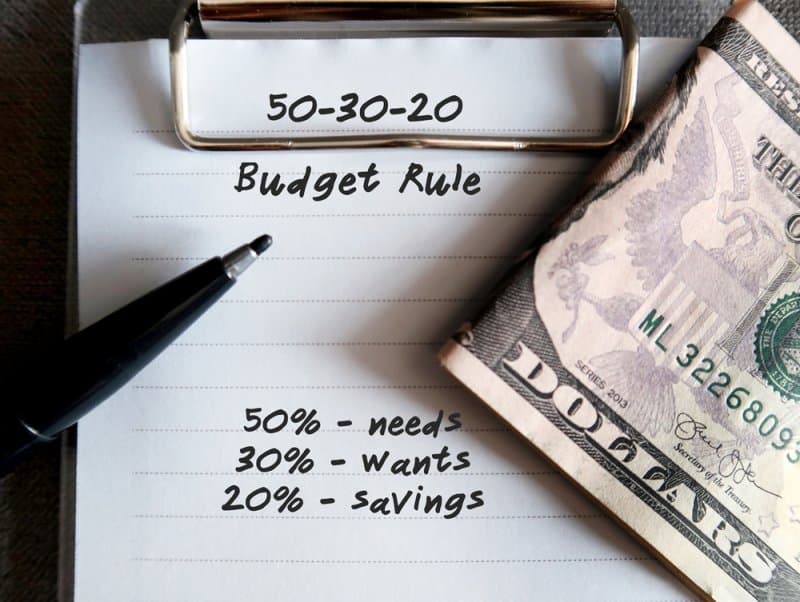
Money management not only involves getting paid regularly but also being aware of where the money goes. The 50/30/20 budget rule is an easy guide to managing one's money by splitting one's monthly earnings into three parts. Whether one is creating their first budget or trying to refine their current money management skills, the strategy enables the individual to spend wisely while working towards their objectives.
The 50/30/20 budget rule refers to a budget system whereby your post-tax income is divided into three parts, depending on your needs, wants, and savings purposes. These three areas receive certain percentages of your salary, thus helping you prioritize your finances.
It became well-known after being popularized in the book by Senator Elizabeth Warren and her daughter, entitled All Your Worth: The Ultimate Lifetime Money Plan. The essence of this budget system is to find the perfect harmony between covering your expenses, enjoying yourself, and saving for the future.
The following are the percentages of:
The above will help in creating a useful budget for the month. You don’t need to assign separate budgets to all your purchases but rather categorize them into broad categories.
Knowing what goes into each of these categories is key to making use of the 50/30/20 budgeting technique properly. There might be some expenses that seem similar but are actually in different categories based on their importance.
Needs are expenses that are not easy to eliminate since they are vital for your daily living and finances. These expenses should not exceed half of your total income per month.
Some of the typical examples are:
So if you have an income of $4,000 per month, you need to spend $2,000 on these things.
It is crucial to differentiate between needs and wants when evaluating expenses. Essential groceries fall into the category of needs, while eating out often is discretionary. The same goes for essential transportation expenses, while purchasing an expensive car might be a want.
If your essential expenses are constantly above 50%, examine your fixed expenses and see if there is anything that could be trimmed down.
Wants are made up of items that make your life better and are not a necessity in day-to-day life. Through wants, you get to use your money freely without forgetting about your financial obligations.
Examples of these include
On a salary of $4,000 per month, $1,200 can be spent on the above expenses.
This does not mean cutting back on all those expenses you find fun; rather, it helps with being careful with how much you spend. You are free to have fun over the weekends and do some shopping as long as you keep within reasonable boundaries.
In case you exceed the suggested amount, you need to see which expenses you do not use anymore and cut them back.
The last 20% will allow you to achieve financial security and reach long-term goals. This habit of saving a certain part of your income will help you to be ready for the surprises that life may bring and to ensure financial stability.
You can allocate these funds for:
For an employee whose income after tax is $4,000, this amount would be about $800.
The creation of an emergency fund will be an excellent start. Try to make sure you have enough money to cover three to six months of vital expenses. Then, when everything is good, you will be able to save for retirement and other financial goals.
The percentage of savings will depend on your financial priorities. When you have a lot of debt, the best thing is to pay more toward your debts than to invest. Debt payments are essential needs, whereas additional payments to loans become part of the savings budget.
After grasping the three types, following the rule becomes quite simple and involves only some calculations. Take your net income per month, which is the income you earn after taxation.
Multiply your net income by 0.50, 0.30, and 0.20 to obtain the suggested amount for each of the three types.
For an individual earning $5,000 monthly after taxes:
| Budget Category | Percentage | Monthly Allocation |
| Needs | 50% | $2,500 |
| Wants | 30% | $1,500 |
| Savings | 20% | $1,000 |
| Total | 100% | $5,000 |
You can also use a 50/30/20 budget calculator to determine these amounts automatically. Enter your monthly take-home income, and the calculator can show how much to allocate to each category.
Remember to use after-tax income rather than your gross salary. If your earnings change, recalculate the allocations so your budget reflects your current financial situation.
Among the various budgeting percentage rules, the method is distinctive because of the ease of the structure provided without having to track all of your expenditures. Some advantages of this include
This list provides only some of the advantages of the 50/30/20 method, especially for people trying to budget. It is just a suggestion rather than a necessity.
The 50/30/20 rule of budgeting makes it easy to manage daily expenditures, lifestyle costs, and savings. Splitting your income from work into three parts helps one acquire financial discipline without having an extremely complex budget system. Though it might be necessary to make changes in the suggested proportions, the main idea of the budget system is still relevant.
Yes. You can apply the percentages to each paycheck or calculate them using your total monthly take-home income. Choose a consistent approach that accounts for your pay schedule and regular expenses.
Review your fixed costs, identify opportunities to reduce expenses, and temporarily adjust the percentages. Prioritize necessities while reducing discretionary purchases until your financial situation becomes more manageable.
Minimum credit card payments are generally classified as needs because they are required financial obligations. Any additional payments toward outstanding balances can be included in your savings and financial goals allocation.
It can work, but people with fluctuating earnings should consider budgeting around a conservative estimate of their monthly income. During higher-income months, additional earnings can strengthen emergency savings and cover upcoming expenses.
Review your allocations at least once a month and whenever your financial circumstances change significantly. Changes in salary, housing costs, debt, or personal goals may require adjustments to keep your budget realistic.
This content was created by AI